
Bourreria superba: The Tree That Always Has Guests
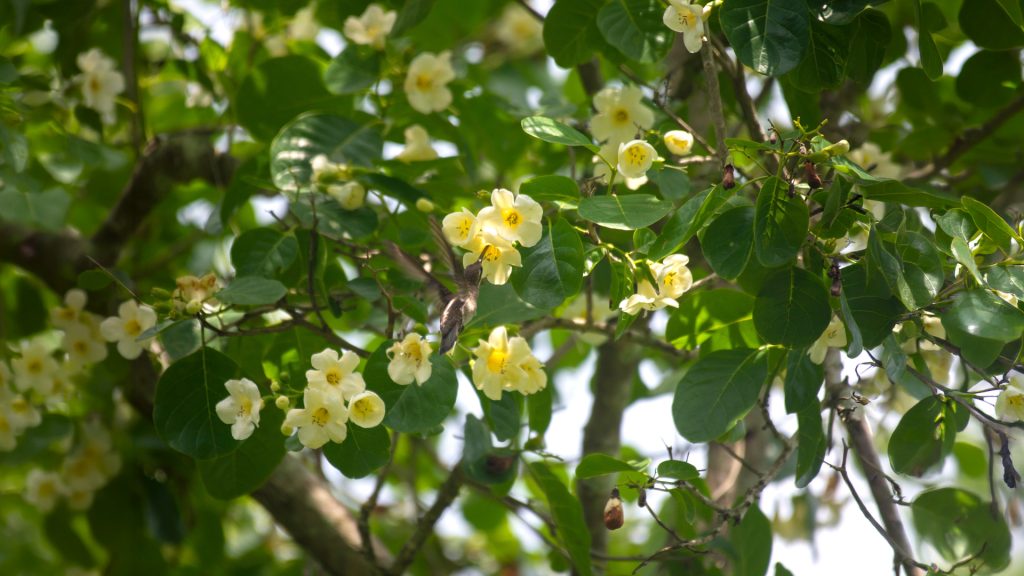
In the tropical forest, some trees command attention with their huge flowers or imposing size. And then there are others that quietly keep their magic to themselves. Bourreria superba belongs to this…
Mexican Orchid of the Month: Leochilus crocodiliceps

During the month of July, a tiny inhabitant of the Vallarta Botanical Garden draws special attention: Leochilus crocodiliceps, an orchid whose name refers to the species’ most striking feature. Although its flowers…
A Living Museum, but there’s more to us than meets the eye!

Twenty years ago, the land where the Vallarta Botanical Gardens now stand was a patchwork of cow pastures and agave fields. Today, it is home to one of the most diverse and…
Mexican Orchid of the Month: Bletia macristhmochila

The orchid of the month for June is one of the most beautiful and ephemeral species in our flora: Bletia macristhmochila. It is a geophytic plant, meaning a species capable of storing…
Mexican Bird of the Month: Cypseloides niger

The bird of the month for June is a species as remarkable as it is elegant: the Black Swift (Cypseloides niger). This medium-sized bird is characterized by its almost entirely black or…
Mexican Orchid of the Month: Lycaste crinita

Lycaste crinita, also known as “Canelita” or The Haired Lycaste, is an epiphytic orchid endemic to Mexico, recognized for its unique appearance and delicate fragrance.
Guaranteeing the future of four endangered orchid species

It may be tucked away inconspicuously in one of our conservatories, but the in vitro Orchid Propagation Laboratory at the Vallarta Botanical Garden is a powerhouse of conservation. Every year the lab…
Oncidium hintonii

During spring and summer, the flowers of the Oncidium orchid once again take center stage in the Vallarta Botanical Garden. This time, O. hintonii surprises us with the floral and aromatic display…
Species new to science found in the Vallarta Botanical Gardens

During the months of August and September 2023, a detailed exploration of the Naturalista database for the western region of Jalisco led to the discovery of a species previously unknown to science…
Mexipedium xerophyticum

“Los Chimalapas” region, located between Oaxaca, Chiapas, and Veracruz, is kaleidoscope of biodiversity, with approximately 595,000 hectares, it is the largest area of tropical rainforest in Mexico, More than 24 years ago…