
Mexican Orchid of the Month: Trichocentrum andreanum
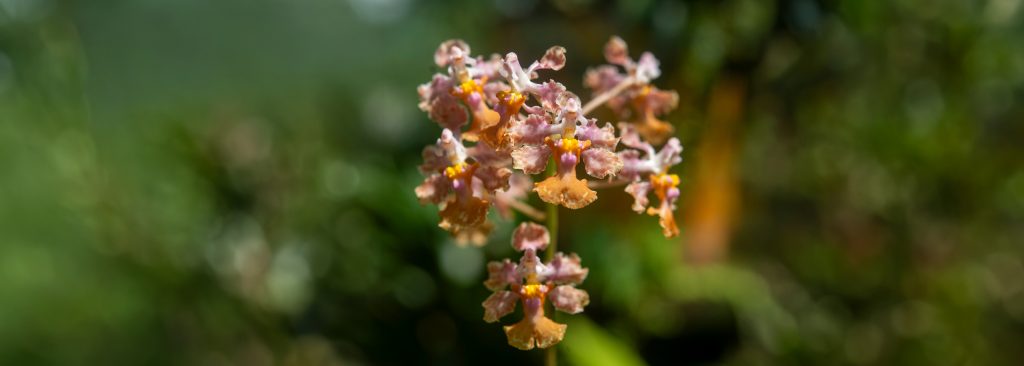
Mexican Orchid of the Month: Chilillo Trichocentrum andreanum By Biól. Evelyn Martinez Cuevas October 15, 2026 The orchid *Trichocentrum andreanum* stands out for its striking, bright yellow flowers, adorned with reddish and brown speckles. These warm hues immediately bring to mind the colors of autumn, when the landscape fills with golden and coppery leaves. Its […]
Phragmipedium: The Orchid That Traps Pollinators
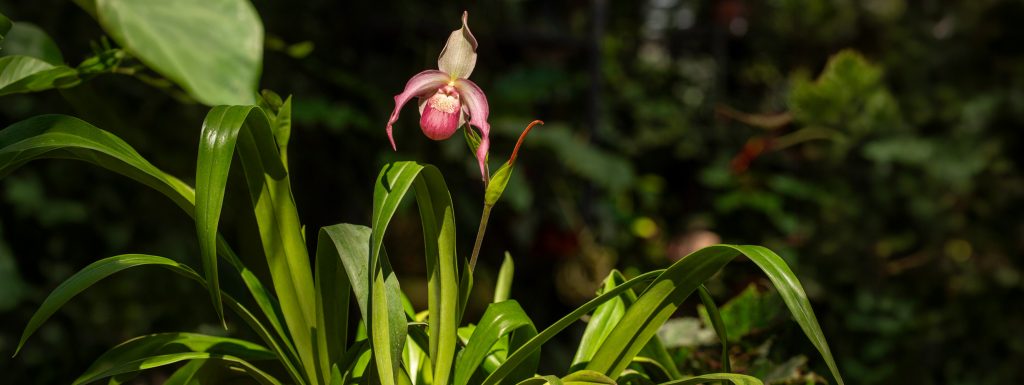
Phragmipedium: The Orchid That Traps Pollinators Phragmipedium By Biól. Evelyn Cuevas September 23, 2026 Phragmipedium (Rolfe) is one of the most fascinating genera of Neotropical orchids. It belongs to the subfamily Cypripedioideae, commonly known as slipper orchids due to their inflated labellum. This structure functions as a temporary trap and a mechanism for pollinator selection […]
Mexican Orchid of the Month: Scaphyglottis bidentata
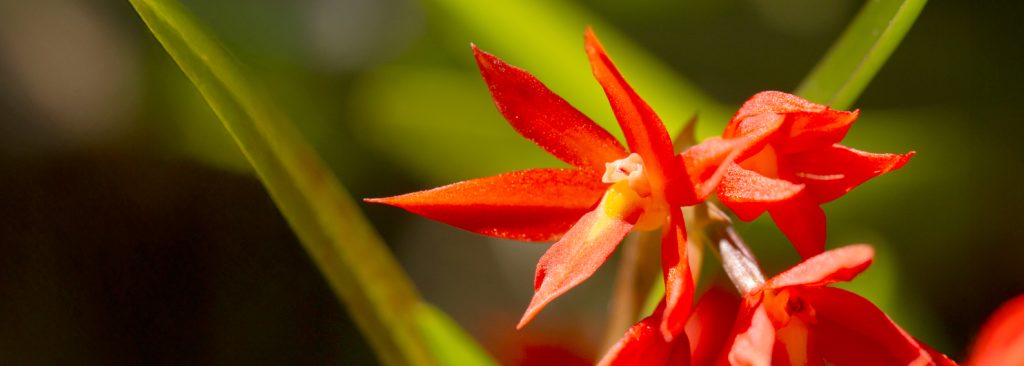
Mexican Orchid of the Month: The Imbricate Scaphyglottis Scaphyglottis imbricata. (Lindl.) Dressler By Biól. Evelyn Martinez Cuevas September 13, 2026 This month, to mark our national celebrations, we invite you to visit the Vallarta Botanical Garden and discover, amongst the foliage, a small orchid with a great history: Scaphyglottis imbricata. This orchid, with its slender […]
Forest restoration after the fires: how the Ocelot Sanctuary is recovering
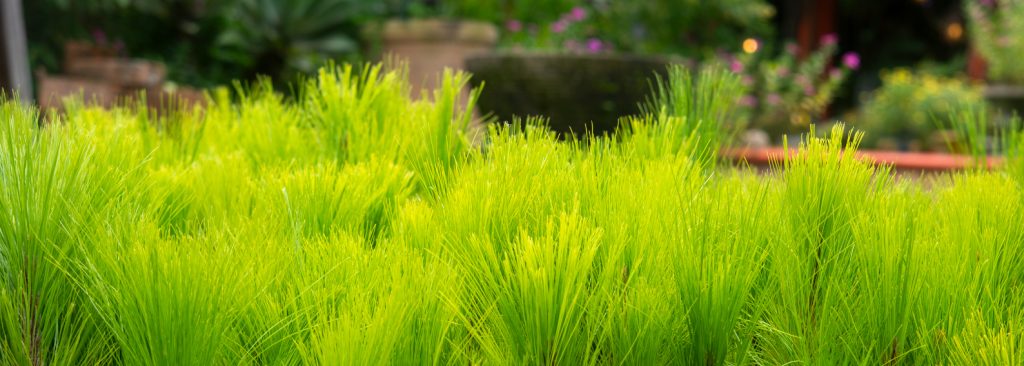
Forest Restoration After the Fires: How the Ocelot Sanctuary Is Recovering By Biól. Evelyn Martinez-Cuevas Sep 11,, 2026 When fire sweeps across the sierra, the landscape can look devastated and bleak. Yet beneath the ground, among the seeds that remain, the story of an ecosystem trying to rise again begins. At the Ocelot Sanctuary, a […]
Bourreria superba: The Tree That Always Has Guests
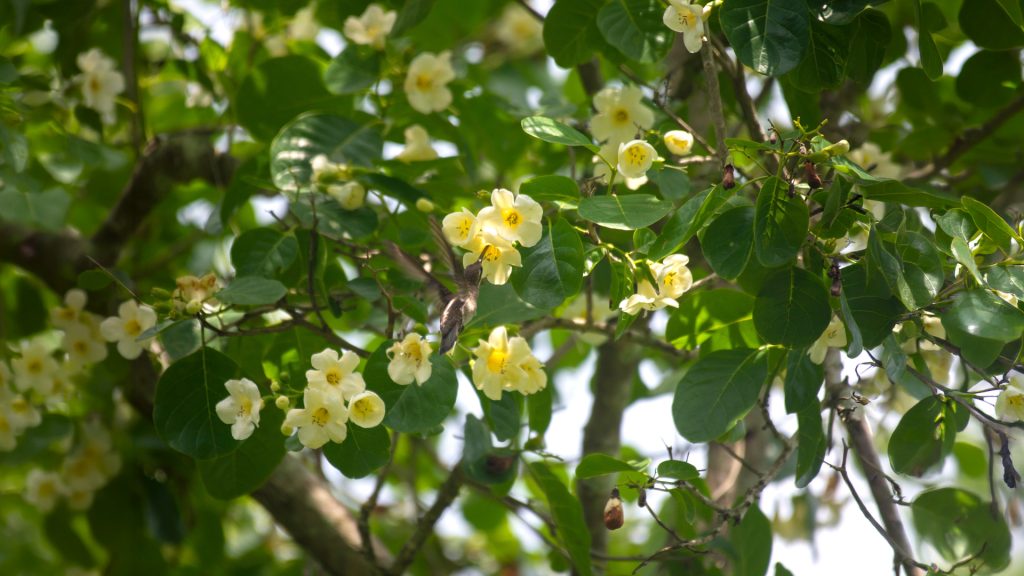
The Tree That Always Has Guests Bourreria superba By Biól. Adolfo Servin Diaz Agosto 25, 2026 In the tropical forest, some trees command attention with their huge flowers or imposing size. And then there are others that quietly keep their magic to themselves. Bourreria superba belongs to this latter group. For much of the year, […]
The majestic Magnolia ofeliae: a living treasure of Jalisco
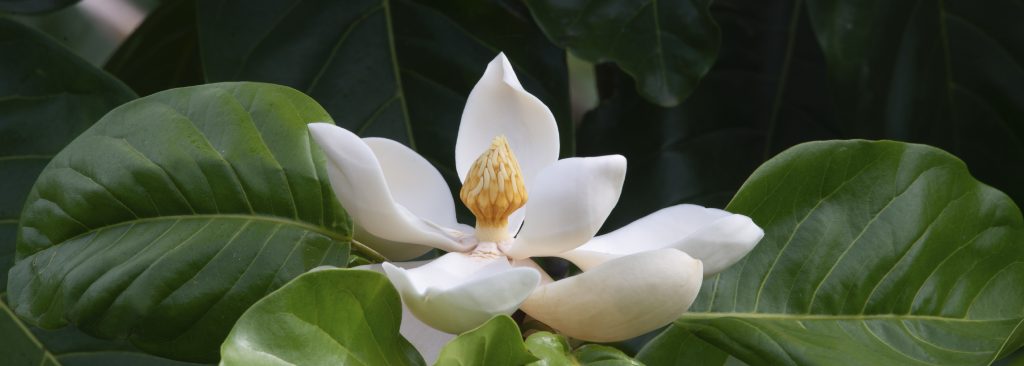
The majestic Magnolia ofeliae: a living treasure of Jalisco Magnolia ofeliae By Biól. Adolfo Servin Diaz Agosto 15, 2026 Magnolias belong to the family Magnoliaceae, one of the oldest lineages of flowering plants on the planet. Traditionally, species of the former genus Talauma are known in Mexico as yoloxóchitl, a word of Nahuatl origin meaning […]
Mexican Orchid of the Month: Ornithocephalus inflexus
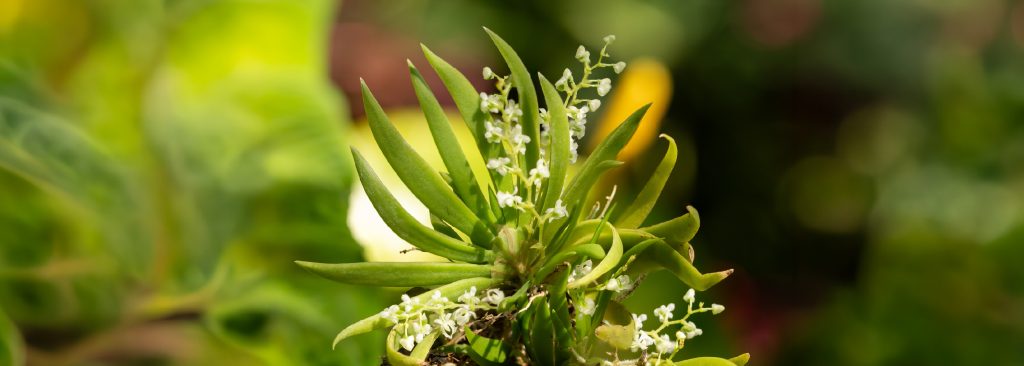
Mexican Orchid of the Month: The bent Ornithocephalus Ornithocephalus inflexus By Biól. Karen Muñoz Agosto 13, 2026 During the month of August, we invite you to awaken your curiosity and take a very close look at the trunks of old citrus trees or tree ferns, as their bark is the habitat of the miniature orchid we […]
Mexican Bird of the Month: Spinus notatus
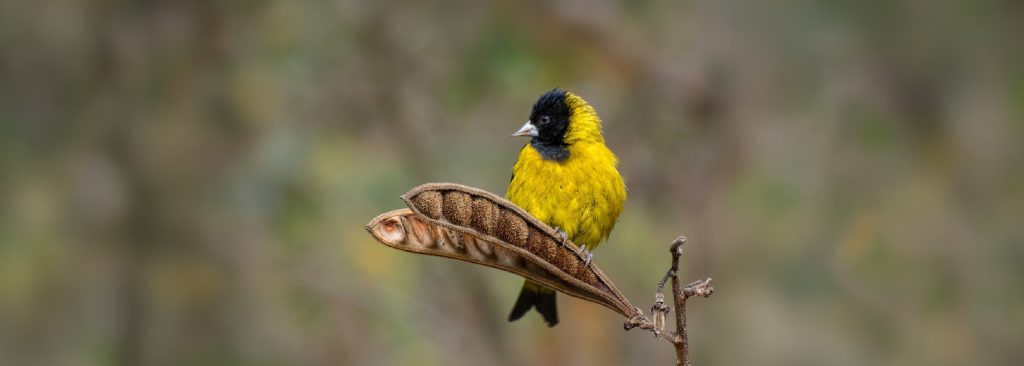
Mexican Bird of the Month: Black-headed SiskinSpinus notatus By Biól. Karen Muñoz Agosto 1, 2026 Every month offers us the opportunity to get to know a different species. In August, we venture into the montane pine-oak and cloud forests to discover a small bird that stands out for its vibrant colors: Spinus notatus, commonly known […]
Nepenthes: The Plant That Turned a Leaf Into a Stomach

The Plant That Turned a Leaf Into a Stomach Nepenthes By Biól. Evelyn Martinez-Cuevas July 12, 2026 There are plants with magnificent flowers. There are some with peculiar scents. And then there are the Nepenthes, which decided to solve the problem of nutrient-poor soil by turning their leaves into biomechanical digestive traps straight out of […]
Mexican Orchid of the Month: Leochilus crocodiliceps

Mexican Orchid of the Month: Crocodile-Headed Leochilus Leochilus crocodiliceps By Biól. Karen Muñoz July 7, 2026 During the month of July, a tiny inhabitant of the Vallarta Botanical Garden draws special attention: Leochilus crocodiliceps, an orchid whose name refers to the species’ most striking feature. Although its flowers are small, barely reaching about 2 cm […]
 English
 Spanish