The Genus Barkeria and the Art of Looking
By Biól. Evelyn Martinez Cuevas
November 18, 2026
Imagine walking beneath the canopy of the Vallarta Botanical Garden (JBV) and looking up toward the treetops… At first glance, you might think you are only seeing bare branches, lichens, or a tangle of aerial roots. Yet if you sharpen your gaze and let curiosity guide you, you will discover one of Mexico’s most resilient botanical spectacles: the genus Barkeria.
The strategy of these charming orchids is pure efficiency. During the dry season, they shed their leaves to conserve water, remaining as slender stems (cane-like pseudobulbs) that resemble dry twigs until the exact moment comes to unfurl their flowers like beacons for pollinators.
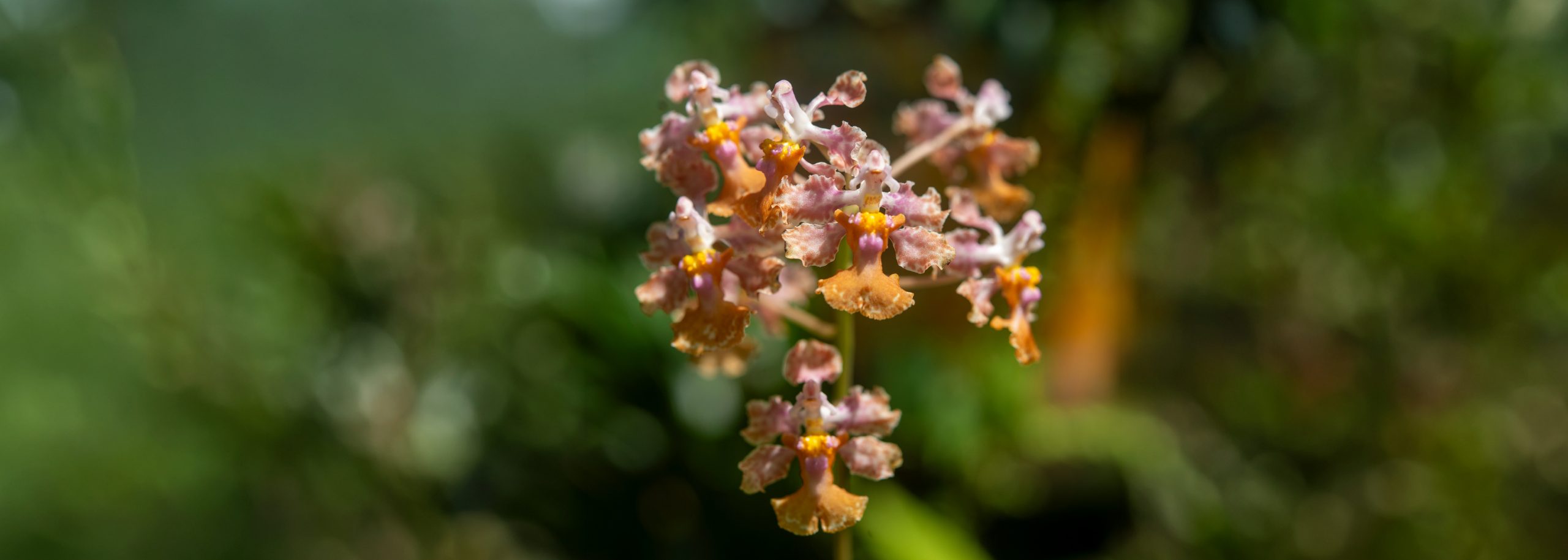
Many Barkerias synchronize their blooming with the transition into the dry season. By shedding their own leaves—or as their host trees (phorophytes) begin dropping theirs—more light enters the forest, leaving the flowers completely exposed without visual obstacles and maximizing their chances of being spotted from afar. Furthermore, many Barkeria species do not produce nectar; instead, they rely on floral mimicry, imitating the shape and color of other flowers that do offer food in order to attract native bees (such as those in the genera Euglossa, Xylocopa, or Centris).
As a lover of evolution and ecology, few things excite me as much as these orchids. Unlike some of their more lush cousins that are “pampered” by constant humidity, Barkerias are true masters of survival in tropical dry deciduous forests and transitional woodlands. They are almost exclusive to Mesoamerica, with their center of greatest diversity right here in our country, representing an open book on how plants negotiate with climate and insects to perpetuate life.
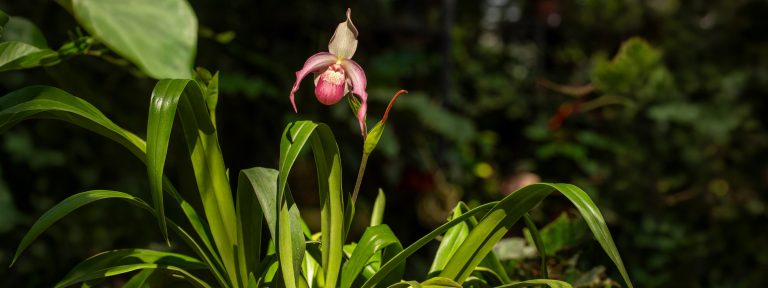
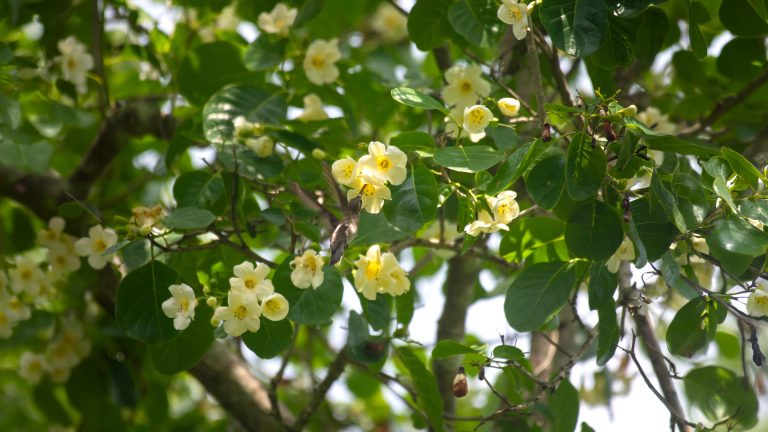
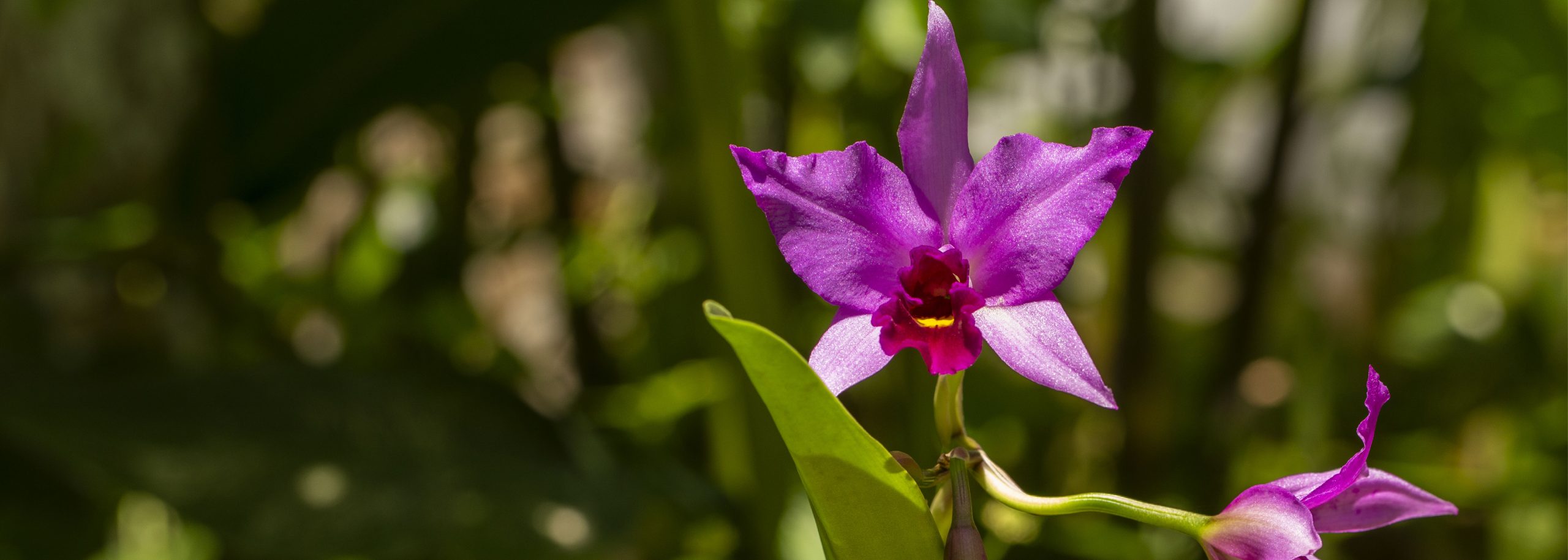
If you visit the JBV today, you are in luck. Before you are four gems in full bloom, each with a distinct ecological story to tell:
- Barkeria uniflora: Its name says it all: “single-flowered,” though it occasionally gifts us with a pair. What it lacks in quantity, however, it makes up for with spectacular size and presence. It is fascinating to wonder why it invests all its energy into one large, showy bloom rather than many small ones: it is an evolutionary gamble to attract specific pollinators and guarantee high-precision pollen transfer.
- Barkeria obovata: An incredible species that defies the notion that all Barkerias come in shades of magenta or lilac. Its smaller, more delicate flowers typically display cream, yellowish, or greenish tones with purple or reddish spots on the lip—proving that in nature, subtlety is also a winning strategy.
- Barkeria scandens: Its epithet scandens means “climbing,” speaking to its vigorous growth habit across trunks and branches. Its intense, almost electric pink flowers, featuring a wide and striking lip, act as a visual magnet amidst the foliage.
- Barkeria palmeri: An orchid endemic to western Mexico. If you pause to observe it, you will notice how its clusters of pink flowers seem to float in midair.
When you head out to look for them among the foliage at JBV, I invite you not just to admire them for their beauty, but to ask yourself: Why are they blooming now, and who are they interacting with?
The next time you walk our trails, slow your pace. Look along the upper and middle branches of rough-barked trees, right where the light filters through the leaves. When you spot a Barkeria, you will know you are looking at much more than a pretty flower: you are witnessing millions of years of coevolution among fungi, trees, insects, and the climate of Mexico.