Mexican Orchid of the Month: Little skull
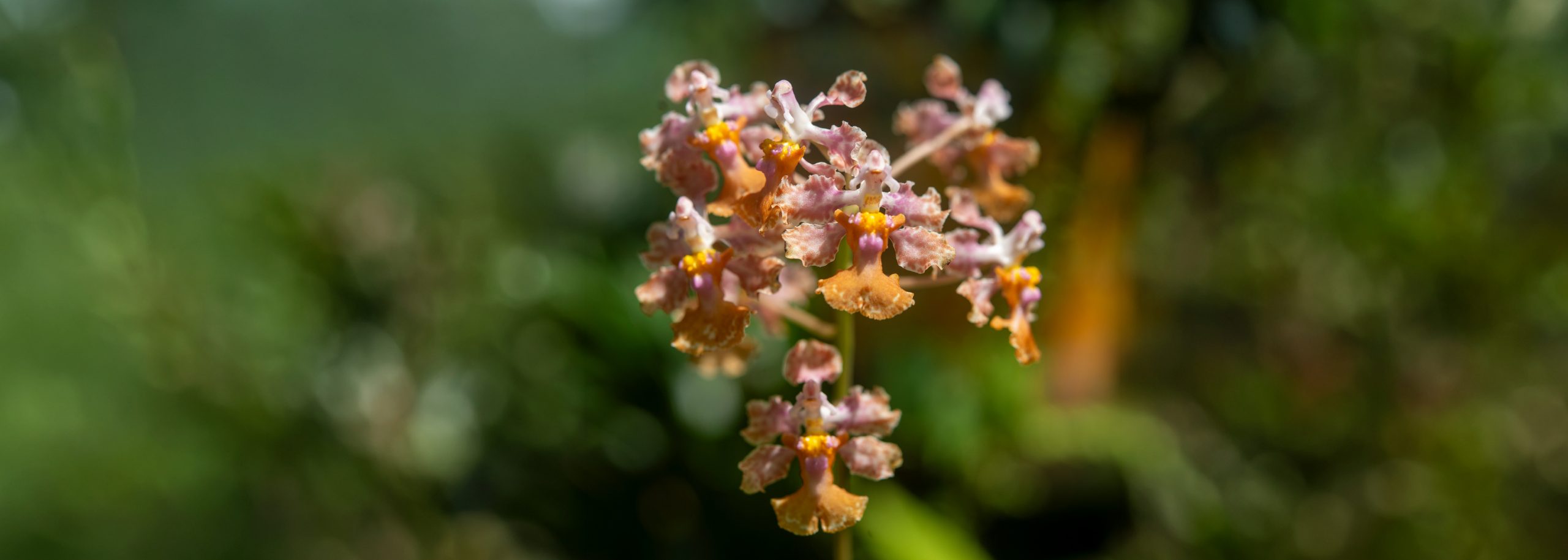
Laelia anceps subsp. dawsonii f. chilapensis
By Biól. Evelyn Martinez Cuevas
November 17, 2026
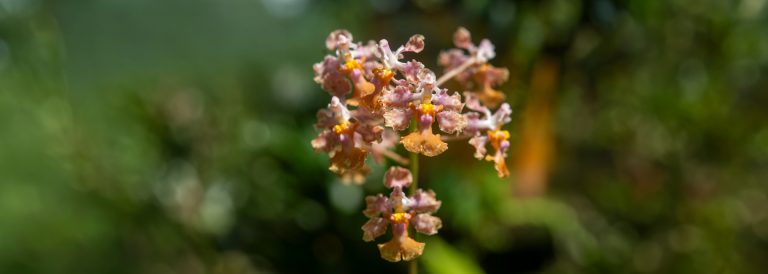
There is an orchid whose story can hardly be told through botany alone. Its scientific name is Laelia anceps subsp. dawsonii f. chilapensis, though in the state of Guerrero, it is known by a much more intimate name: la calaverita (the little skull).
The chilapensis form was described by the Mexican botanist Miguel Ángel Soto Arenas from specimens originating in Xalchuchú, in the municipality of Chilapa de Álvarez, Guerrero. The “type” material was collected in that region and subsequently deposited in scientific collections, where this particular expression of Laelia was formally documented.
However, when researchers began studying the relationship between this orchid and the communities of Chilapa, they found something far more interesting than a rare plant preserved in an herbarium.
La calaverita holds a special place in the traditional celebrations of the Chilapa region. Ethnobotanical research recognizes it as an important element of Day of the Dead celebrations, where its flowers form part of a tradition linking the plant to the memory of those who are no longer with us.
Its presence is not merely ornamental; rather, it is part of a cultural lineage in which plants also have a place. For generations, residents of the region have kept calaverita specimens in the trees of their courtyards. Studies conducted in Chilapa found that these plants are concentrated in home gardens and domestic agroforestry systems, where they are tended alongside other useful and ornamental species.
This phenomenon has an extraordinary consequence: a plant that can be difficult to find in its natural habitat is able to remain alive within the everyday spaces of these communities.
Conservation, in this case, does not necessarily begin with a declaration, a reserve, or an institutional program. It began in a home. Nor did the knowledge necessarily remain written in a book; it was passed down through practice.
Research conducted in Chilapa documented that women play a fundamental role in caring for calaveritas and passing down the knowledge associated with them. Mothers teach their daughters how to tend the plants, and when a daughter establishes her own home, she may receive a plant to take with her and continue cultivating.
Thus, a plant can become a kind of living legacy.