

By: Jesús Ángel Barajas Fragoso
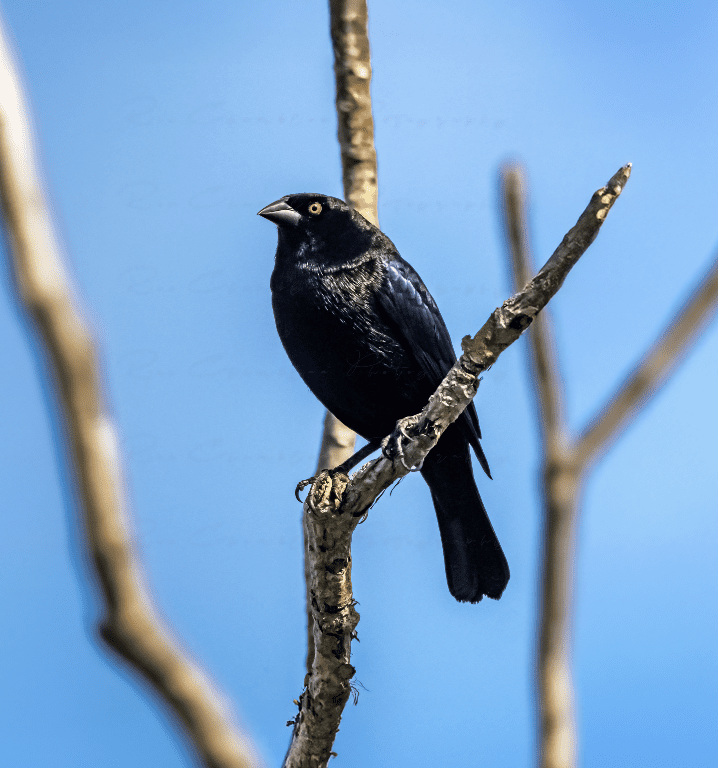
Molothrus Aeneus
Did you know that there are parasitic birds? We are referring to a species that feeds and develops at the expense of another. This is the Bronzed Cowbird, which lays its eggs in the nests of other birds.
This migratory bird forms large flocks in winter and has been important to many Mesoamerican cultures, particularly the Mayan culture, from which comes the legend of the Ts’íiw or Bronzed Cowbird (Molothrus aeneus), which we tell you about below:
The brave ts’íiw bird had multi-colored plumage and brown eyes. One day, the god Cháak gathered all the birds to announce that he would burn the cornfields to fertilize the land, and he entrusted them with the mission of collecting the seeds for the next cycle.
As the fire spread, the birds gathered the seeds, but no one had saved the corn, the most important one. The ts’íiw, without hesitation, threw himself into the flames and managed to rescue them, but emerged with his feathers burned, his eyes swollen, and his body covered in blisters.
Moved by his sacrifice, Cháak granted him a unique reward: the ts’íiw would never have to build a nest or care for his chicks, as other birds would do it for him. T hus, his bravery was marked in tradition, and to this day this bird lays its eggs in other people’s nests in honor of his efforts to save corn, humanity’s essential food.
Learn more legends about native birds in this bird guide from the Centro de Investigación Científica de Yucatán, A.C. (CICY): click here.