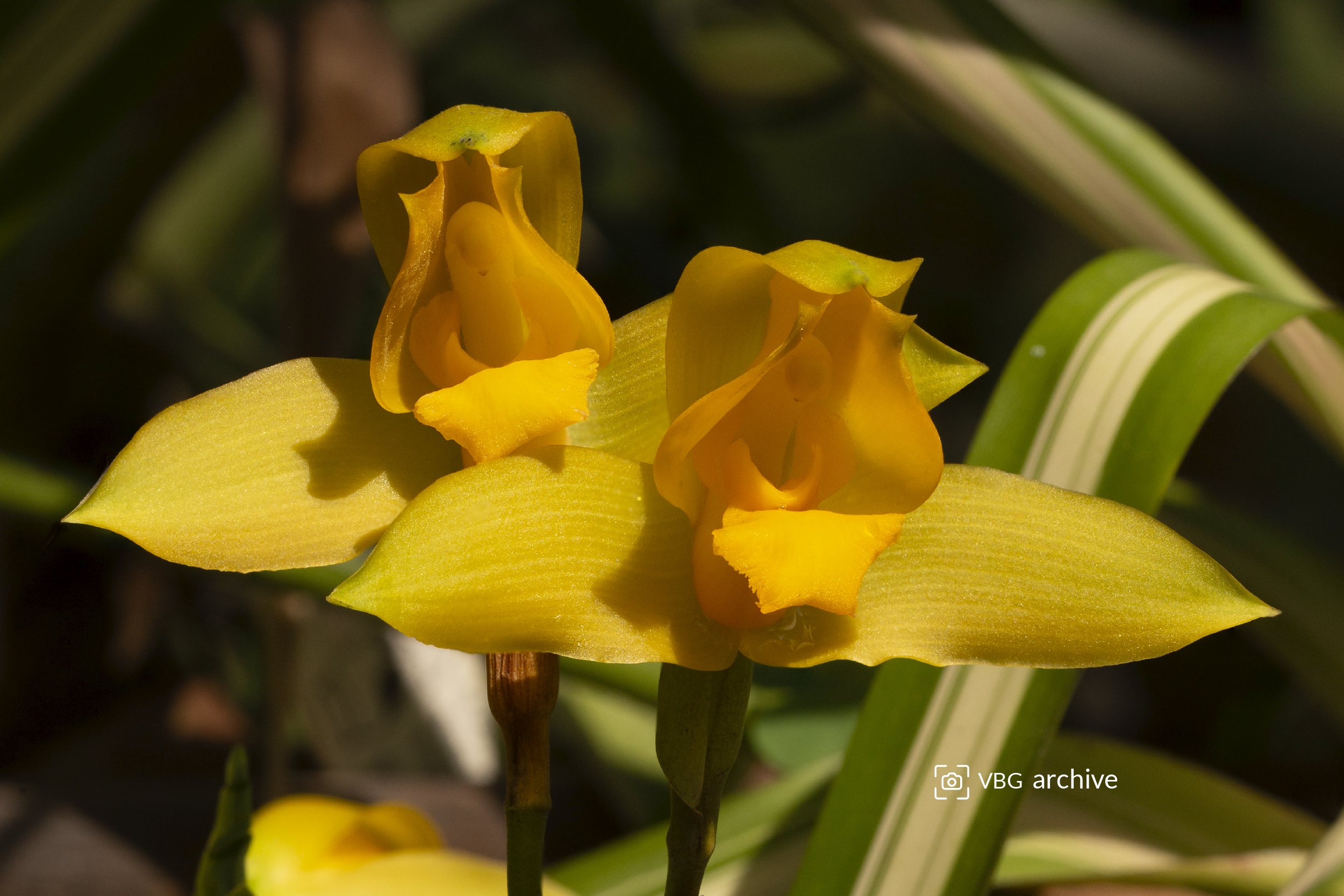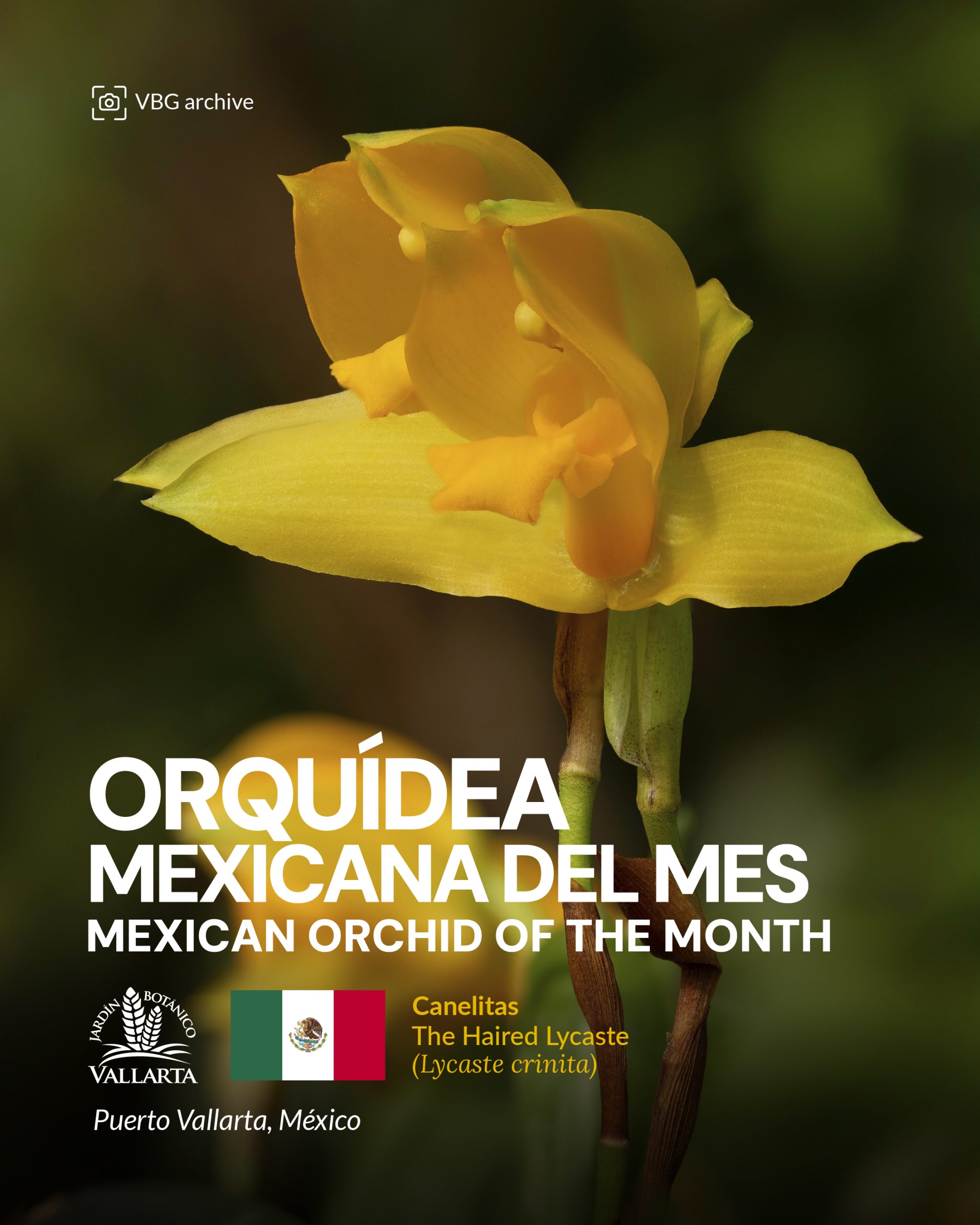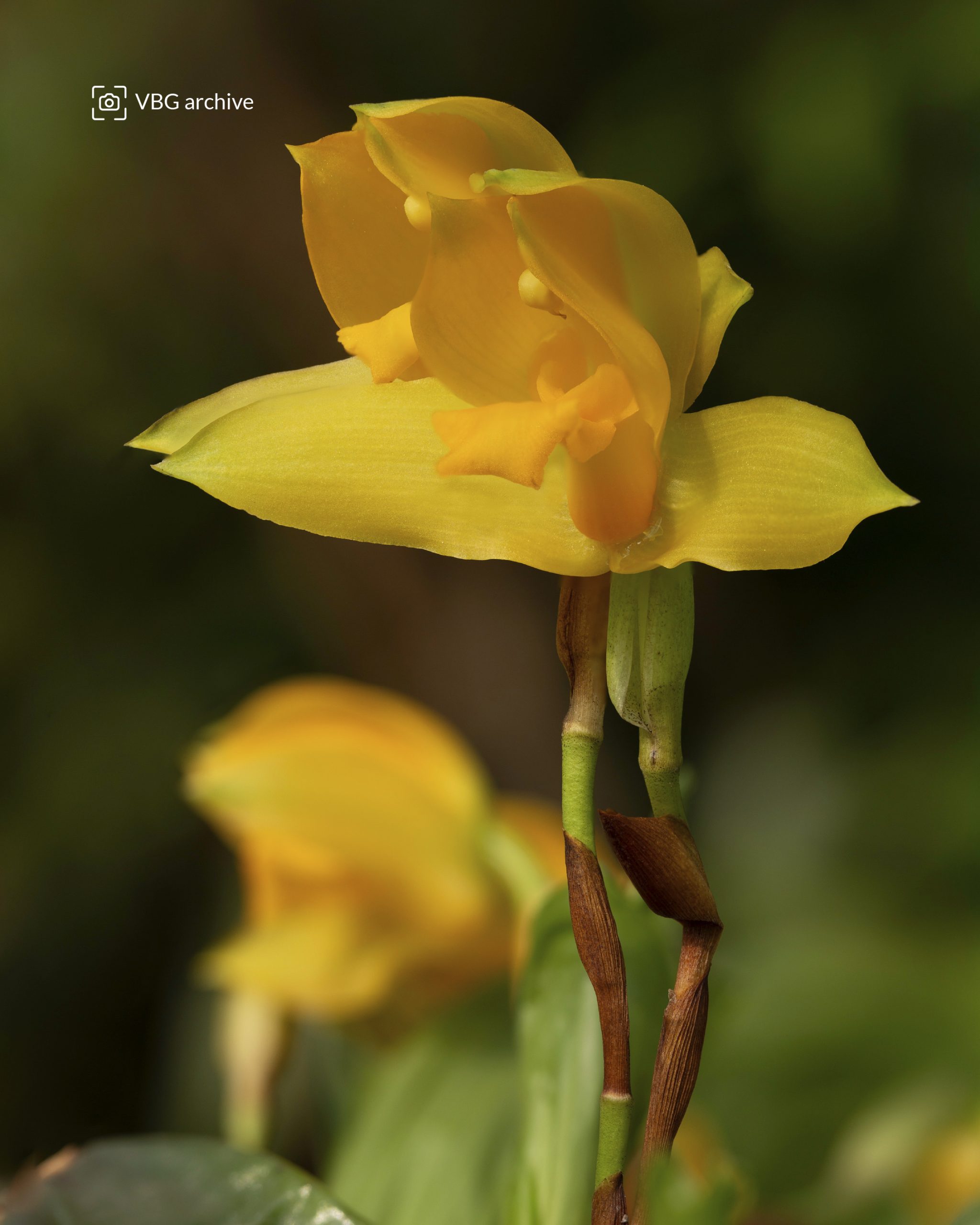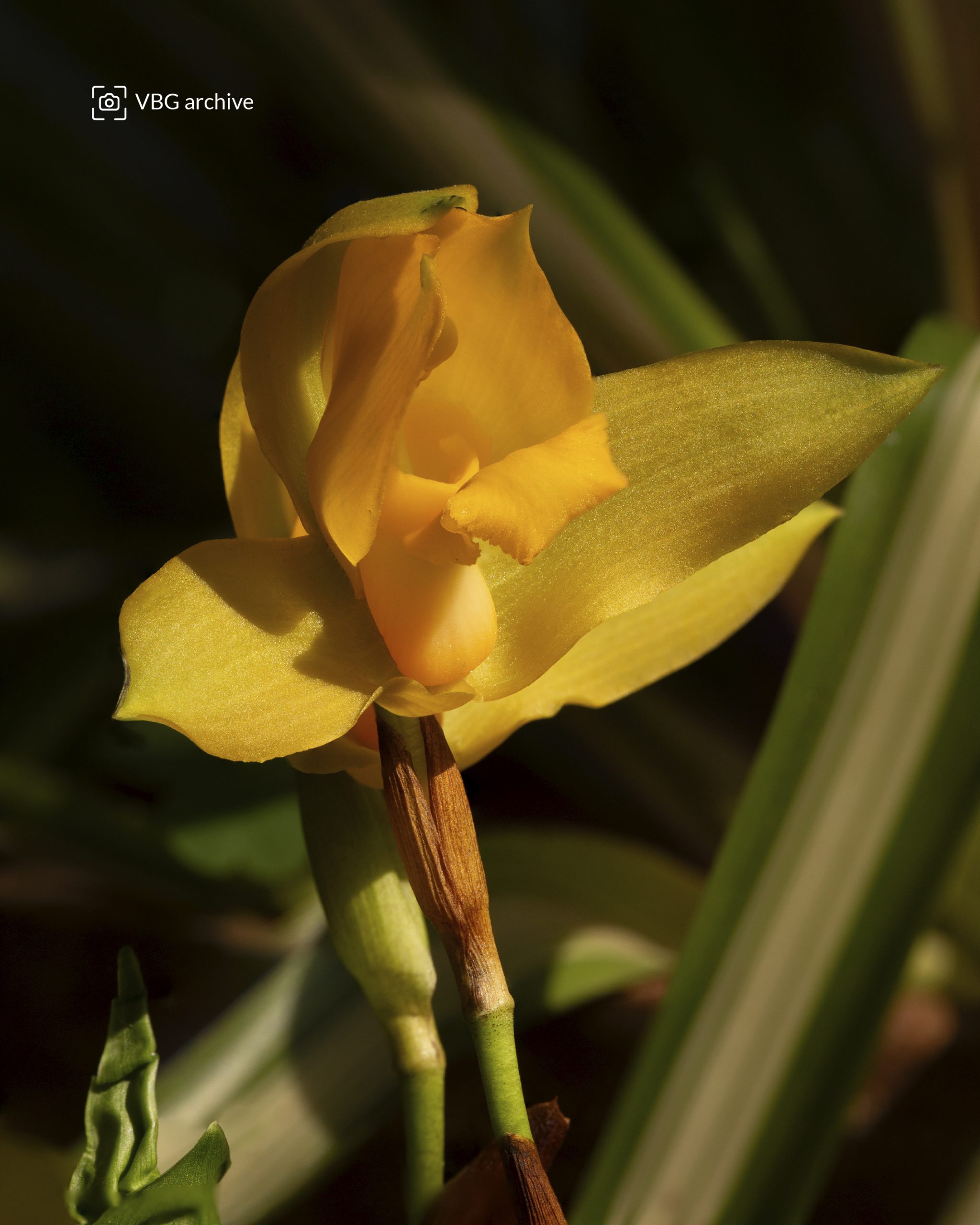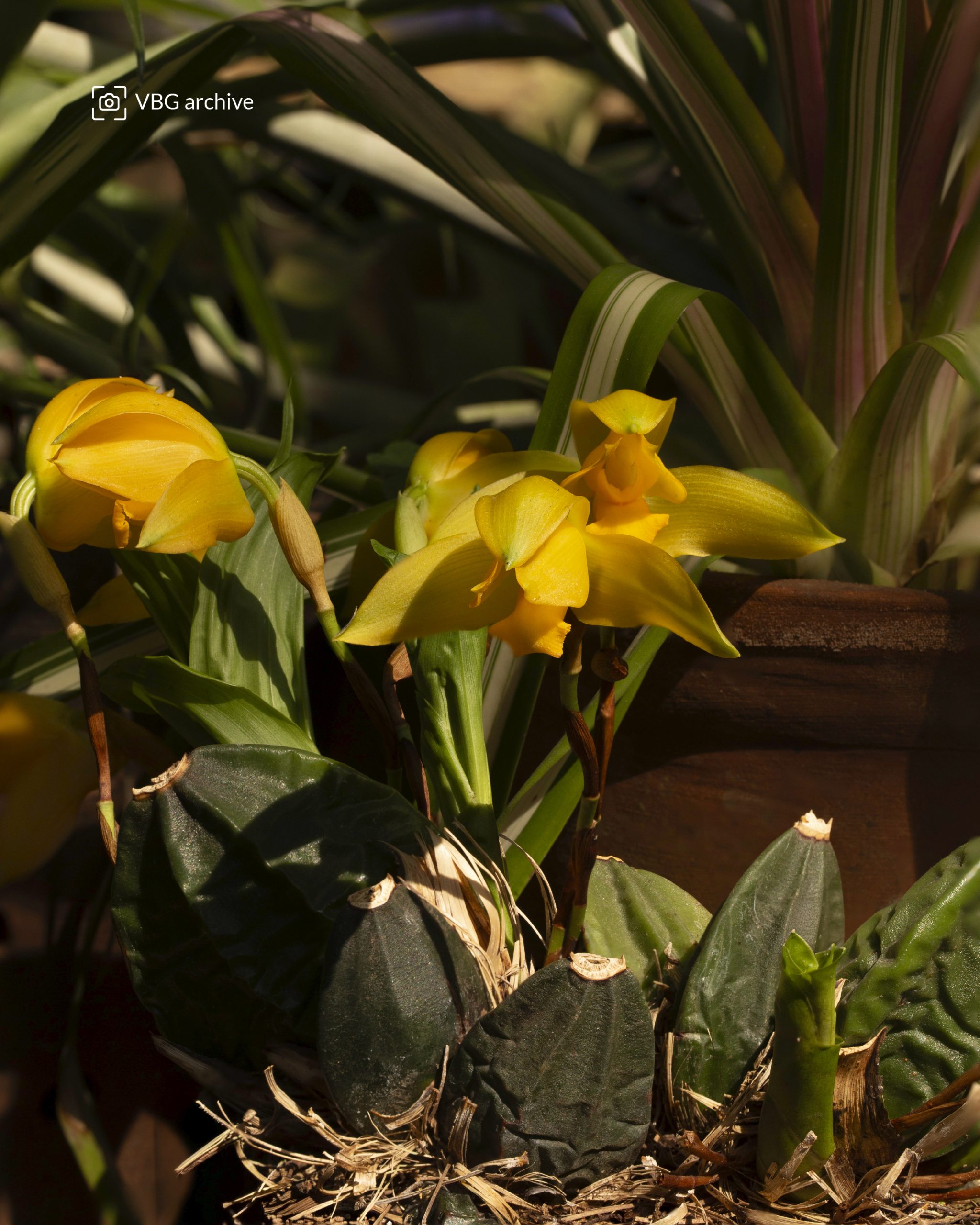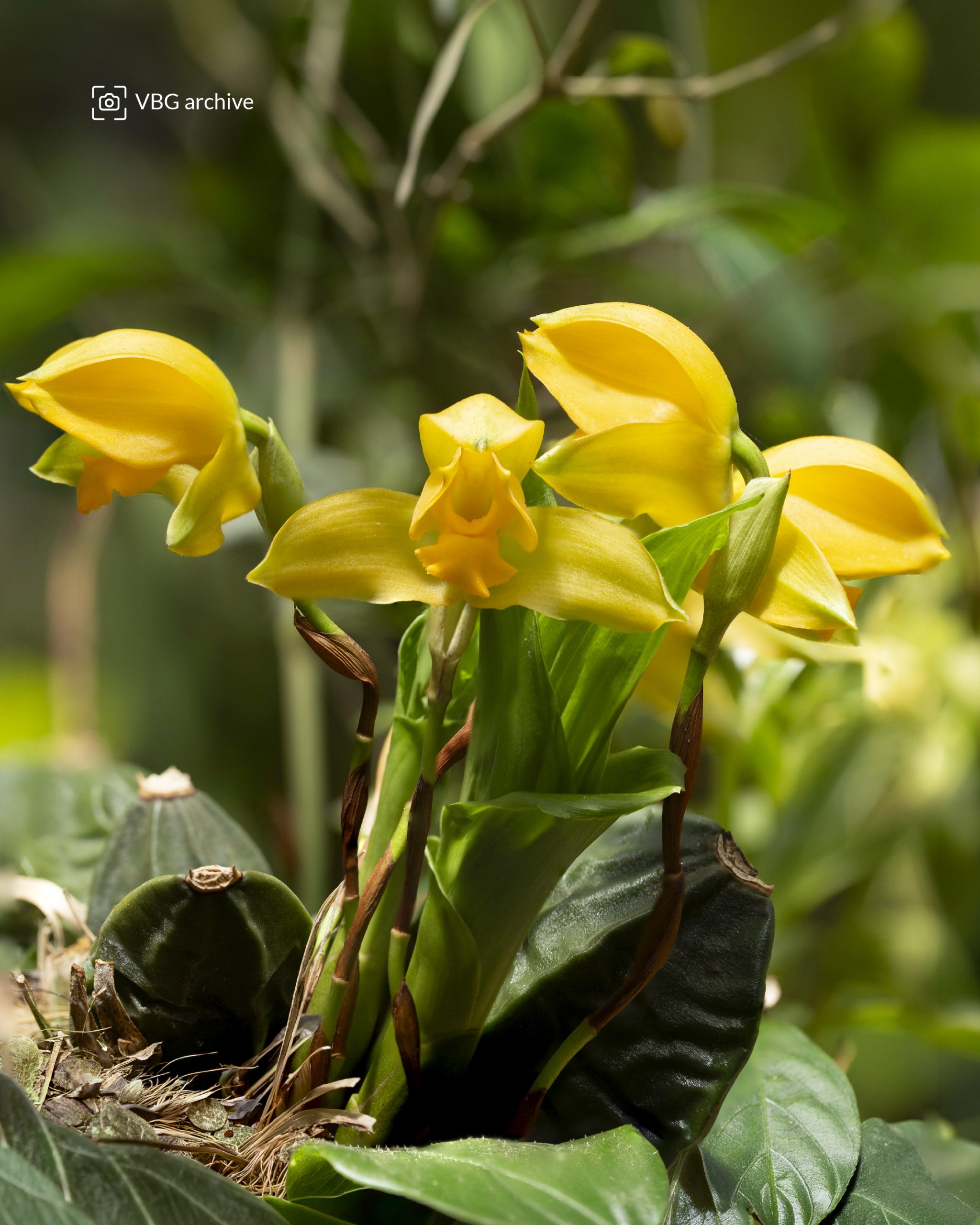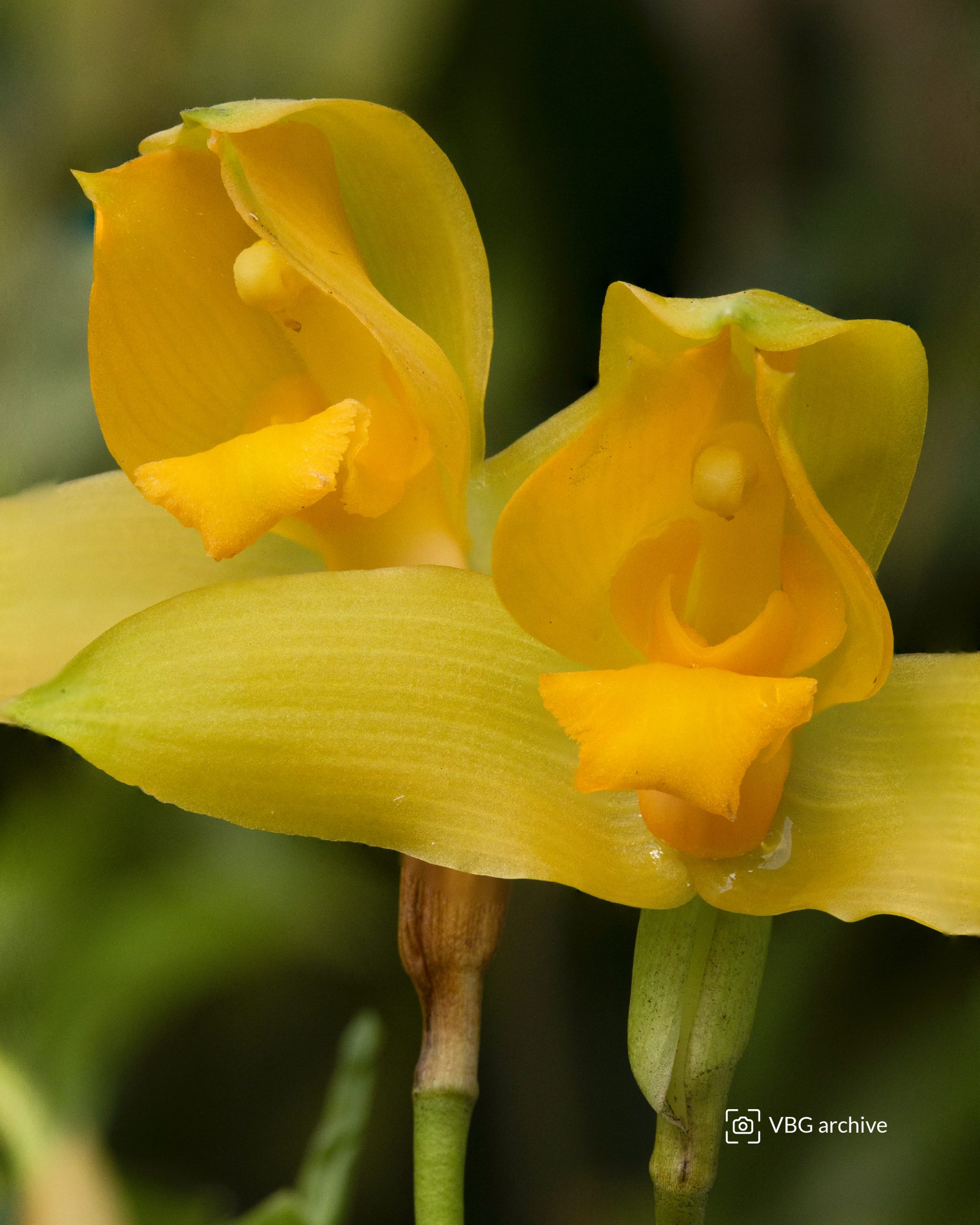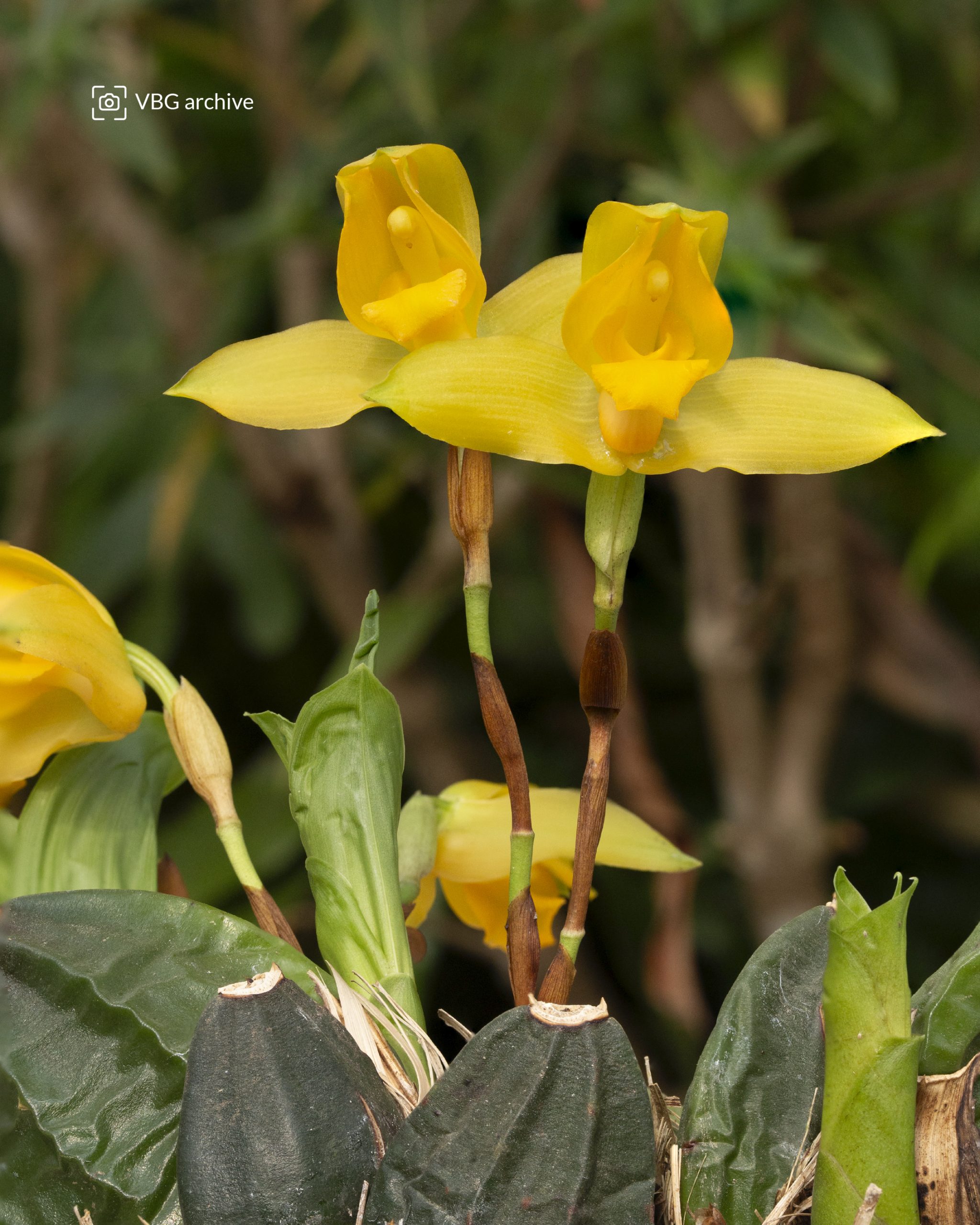


Lycaste crinita, also known as “Canelita” or The Haired Lycaste, is an epiphytic orchid endemic to Mexico, recognized for its unique appearance and delicate fragrance.
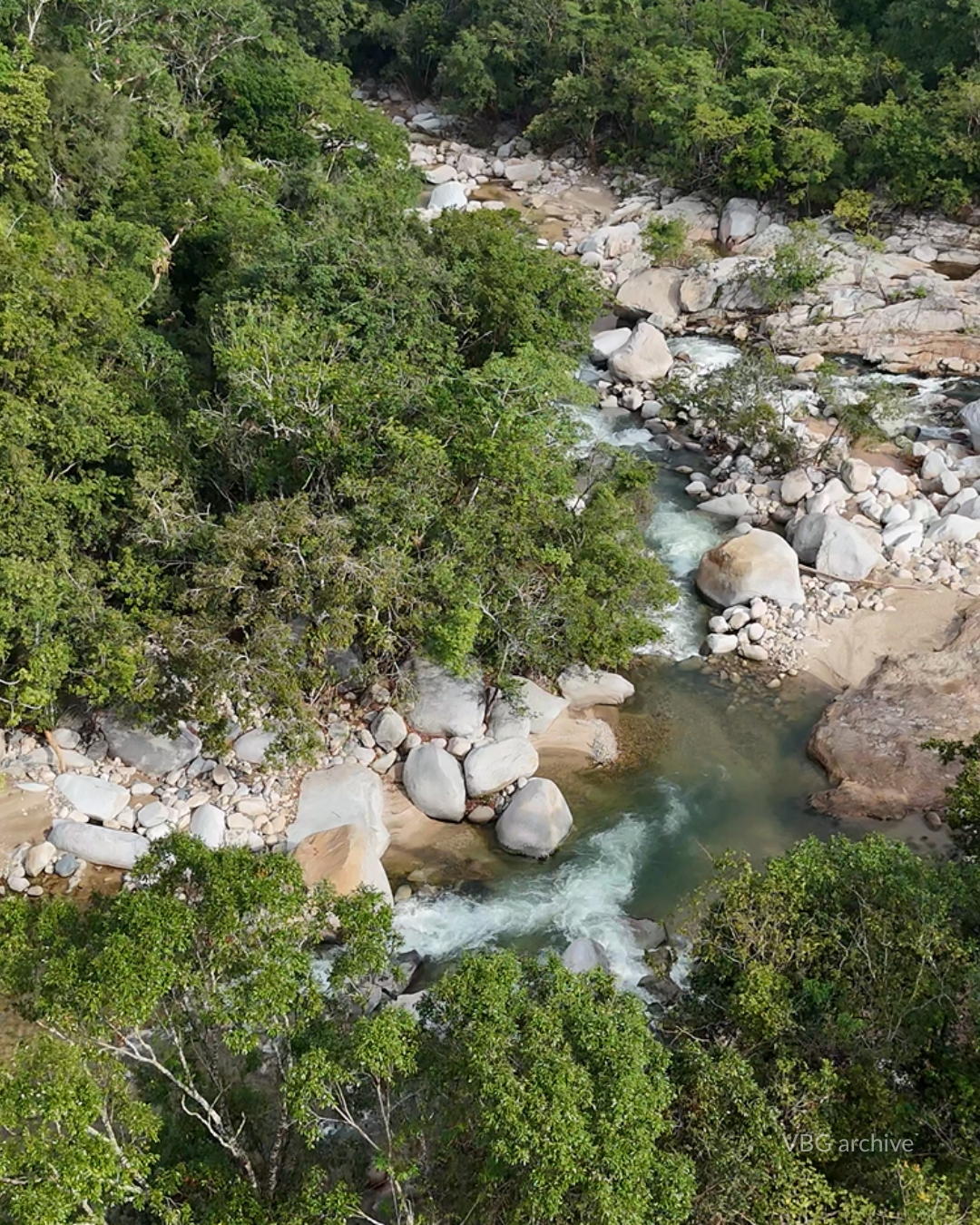
This species is found exclusively in the forests of the southern Sierra Madre, where it grows on oak branches and other trees, thriving within a highly biodiverse ecosystem.
It blooms in early spring, producing striking yellow flowers that stand out in the landscape. Beyond its vibrant color, this orchid releases a pleasant citrus-like fragrance that helps attract pollinators.
One of its most distinctive features is the fine hair-like structures on the inner part of its petals—this characteristic gives rise to its common name, The Haired Lycaste.
Beyond its beauty, Lycaste crinita highlights the importance of preserving the ecosystems where these unique species thrive.
If you want to experience this and other native Mexican orchids up close, the Mexican Orchid Conservatory at Vallarta Botanical Garden houses one of the most important collections in the country.
Plan your visit and connect with Mexico’s biodiversity.