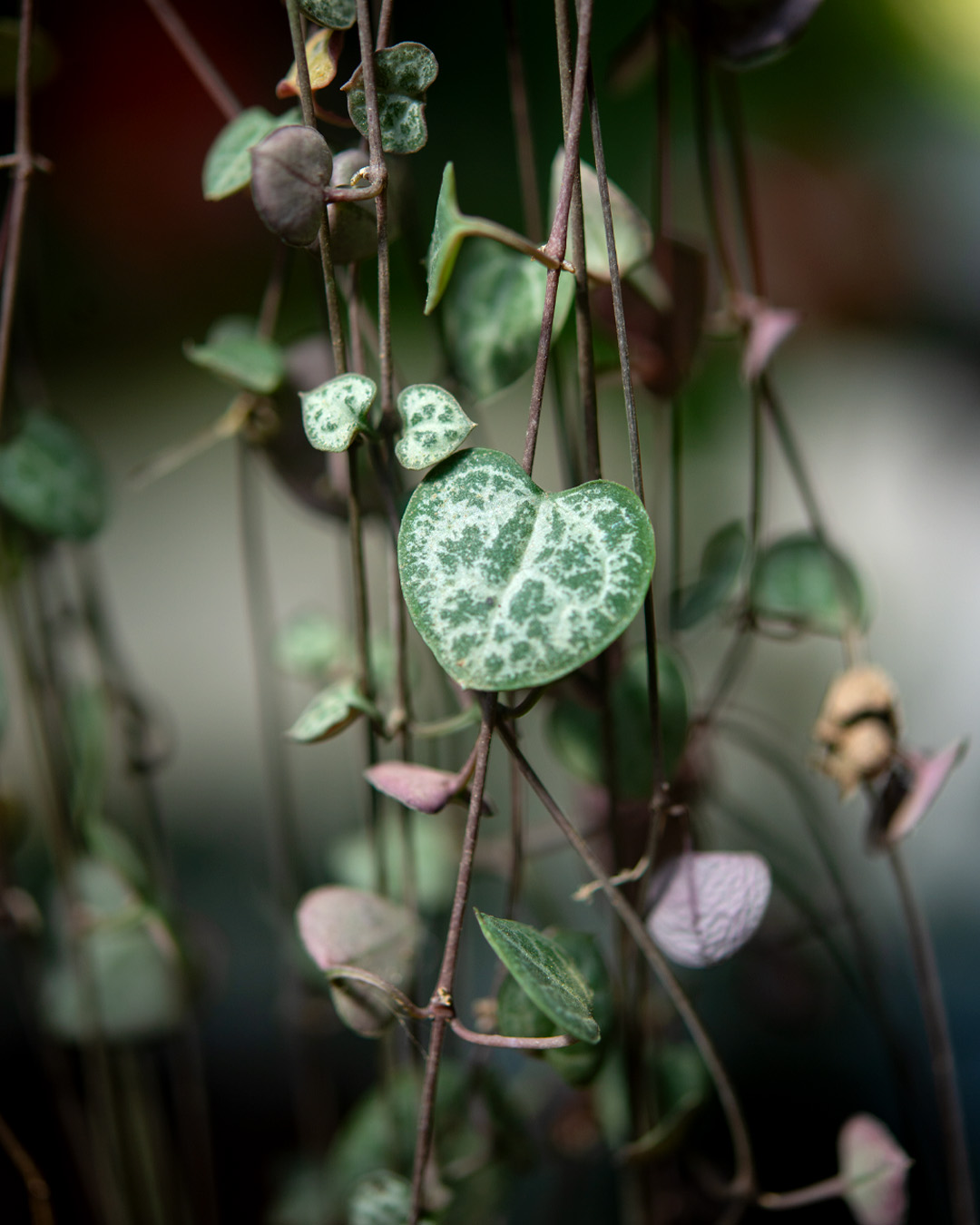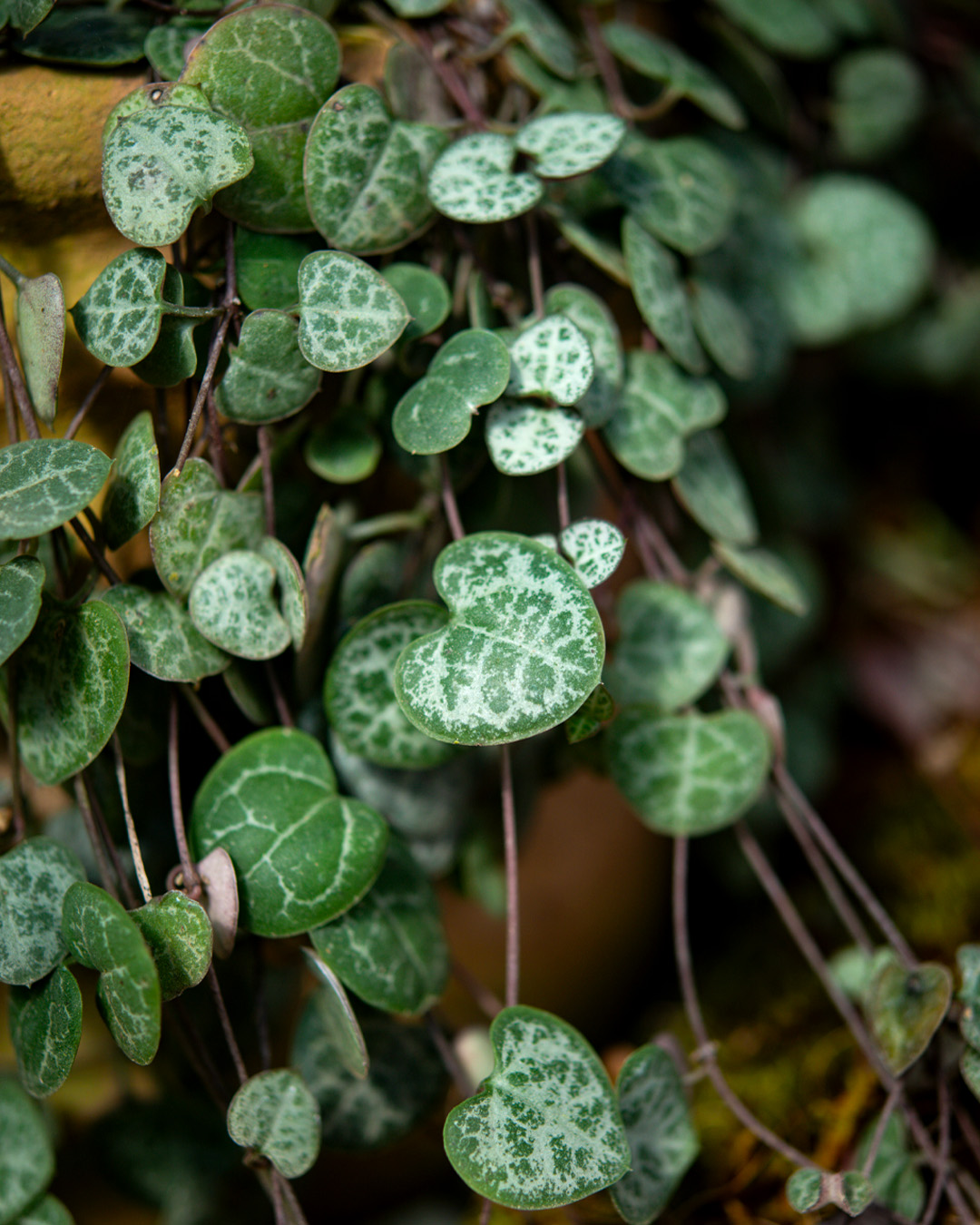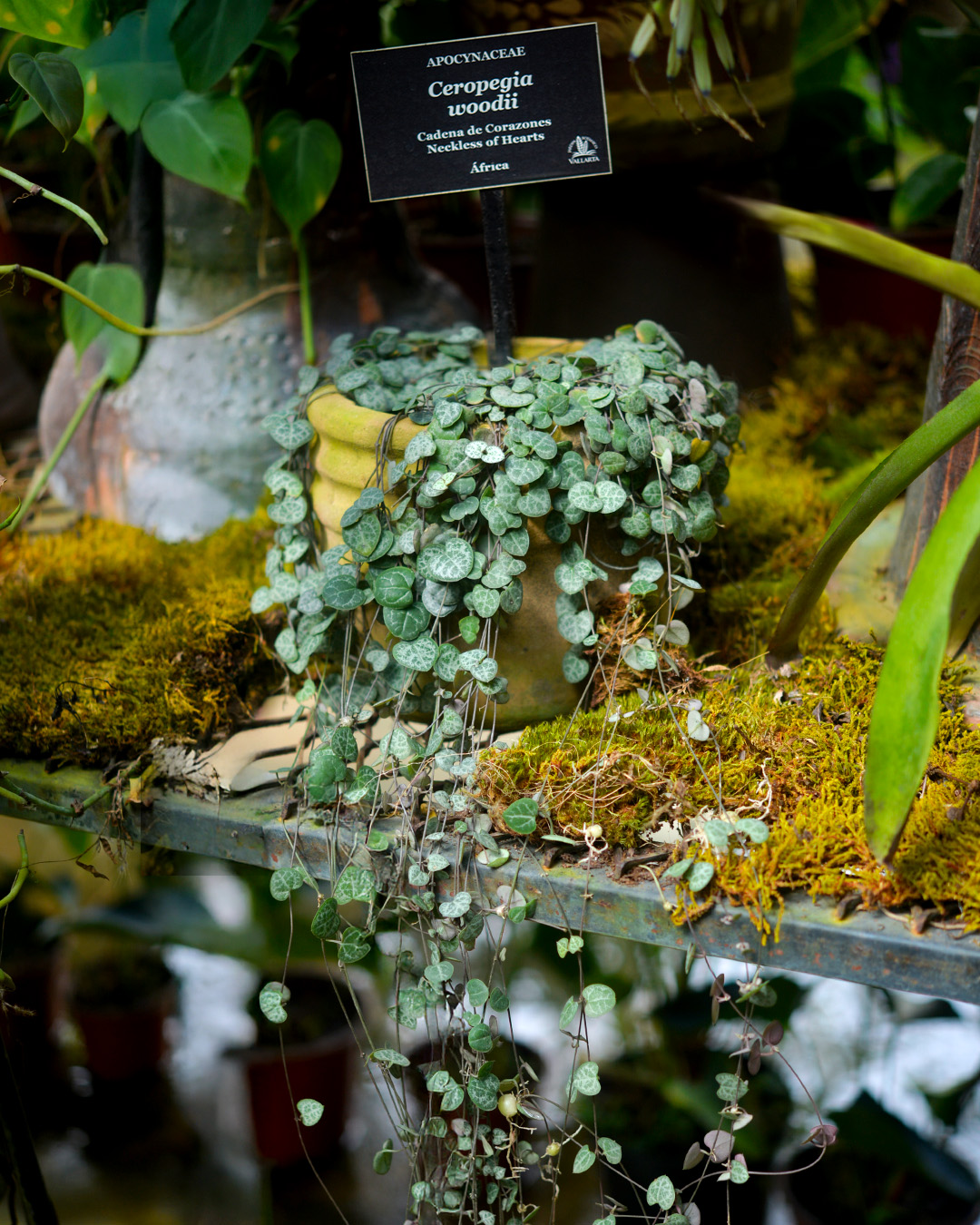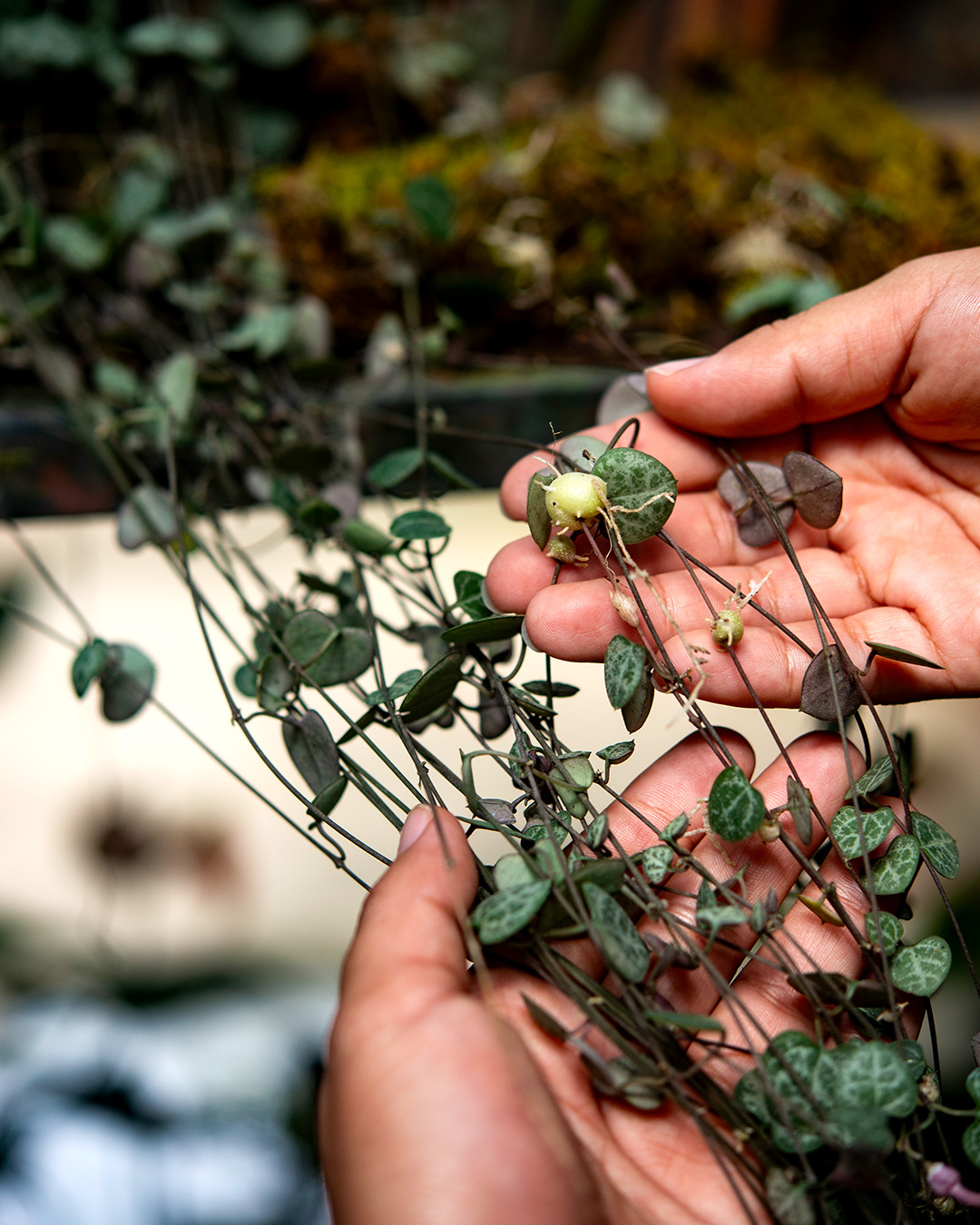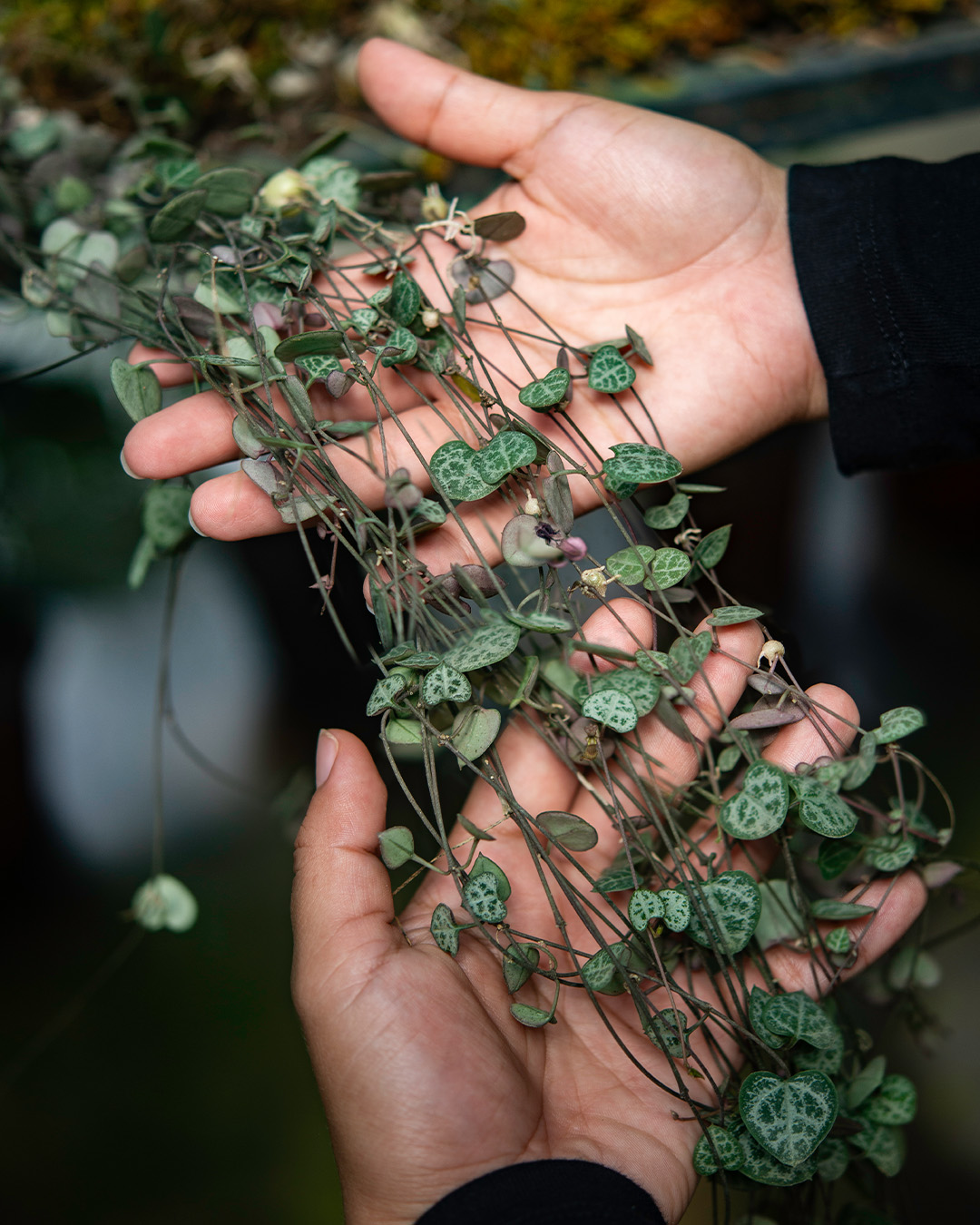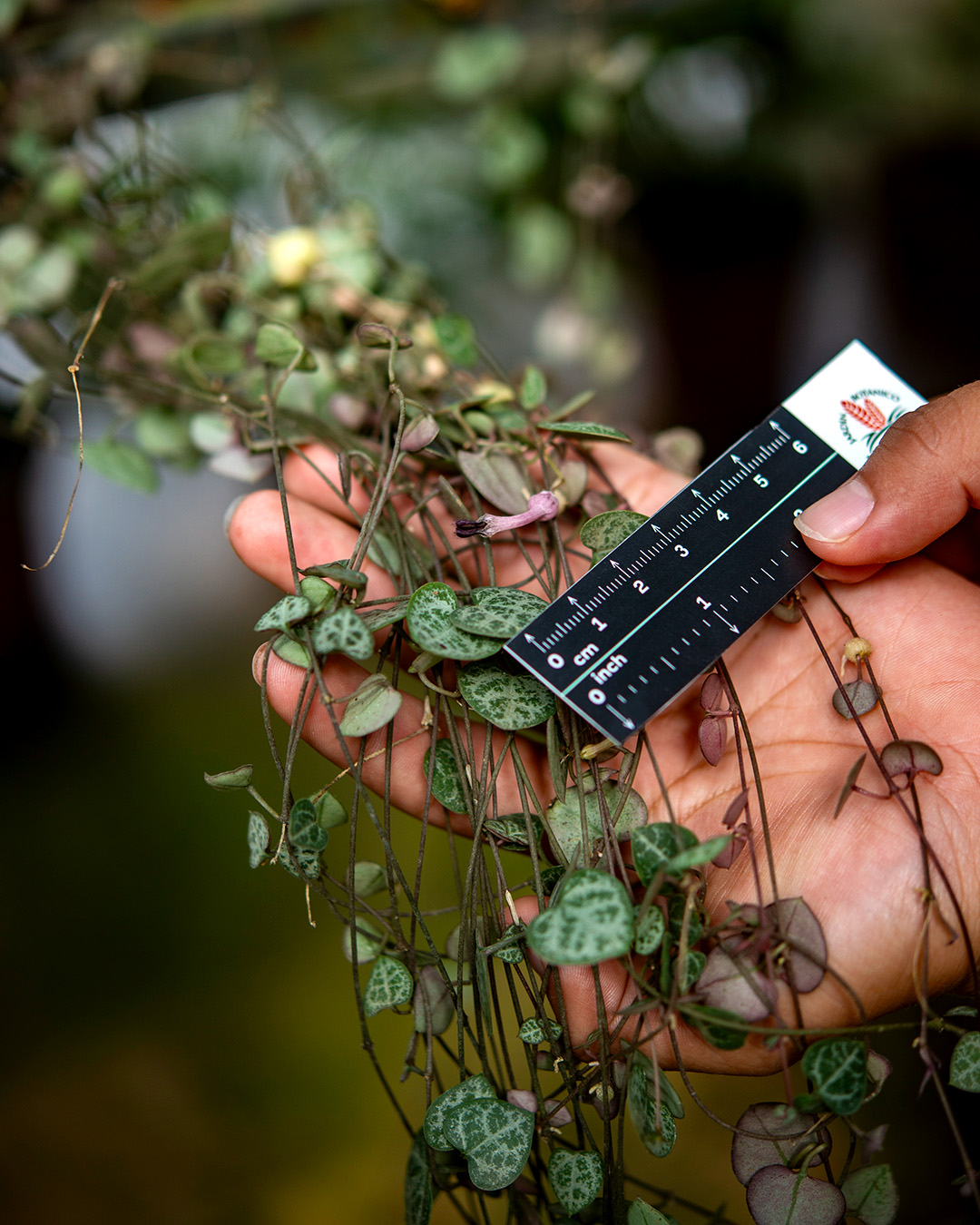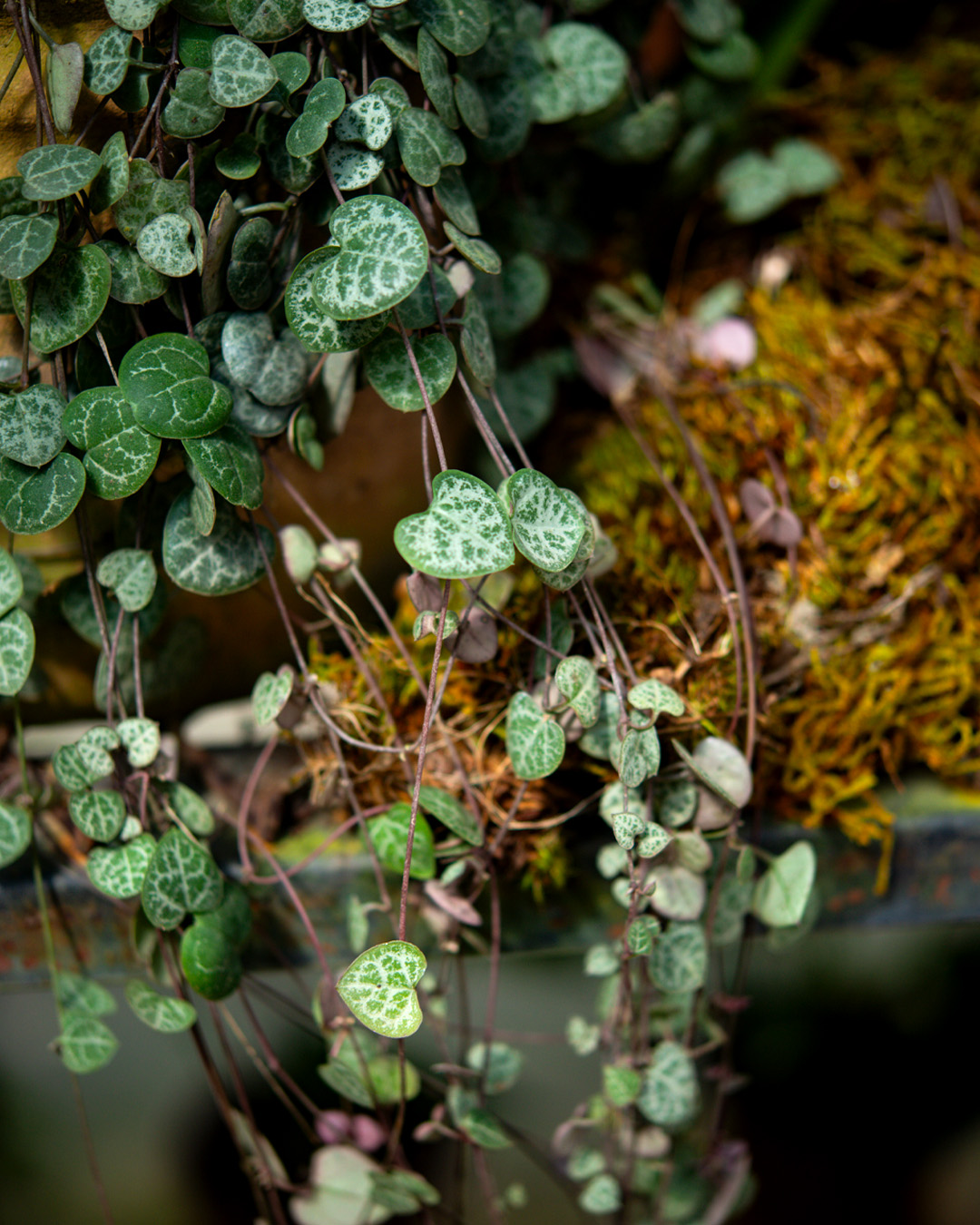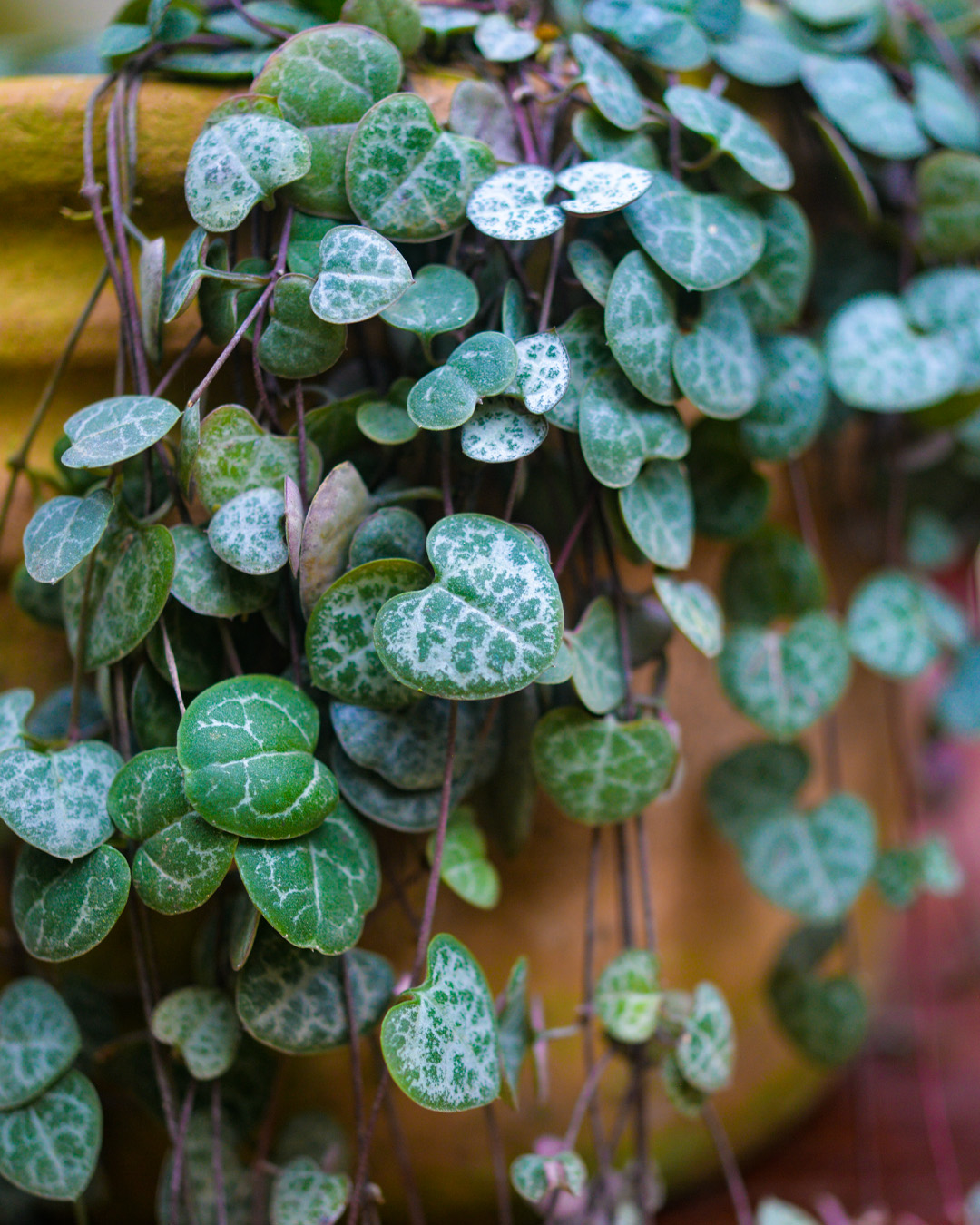


In February, few plants are as photogenic and symbolic as Ceropegia woodii, popularly known as String of Hearts. Its delicate, heart-shaped leaves, marbled in green and silver, cascade in slender garlands that evoke affection, connection, and tenderness. It is a Valentine’s favorite for bright interiors, hanging baskets, and romantic corners.
But behind its sweet appearance, this species hides a sophisticated—and surprising—reproductive strategy.
A Botanical Design with a Double Intention
Native to southern Africa, Ceropegia woodii belongs to the Apocynaceae family. It stores water in its aerial tubers, allowing it to adapt to warm environments and periods of drought. However, its most fascinating feature is not its foliage, but its flowers. Unlike many plants that attract pollinators with sweet fragrances, String of Hearts emits a scent that mimics the smell of prey in distress or decaying organic matter. This chemical signal primarily attracts small flies.How Does the “Deception” Work?
- Attraction: The apex of the tubular flower releases volatile compounds that simulate a potential food source.
- Temporary capture: Flies enter through the floral tube into a pollination chamber, where they are retained by tiny downward-pointing trichomes (commonly called hairs) lining the tube.
- Pollination: As they attempt to escape the chamber, they come into contact with the reproductive structures, transferring pollen.
- Release: Once pollination is complete, the trichomes wither and lose rigidity, allowing the insects to be released.
Basic Care
If you decide to add it to your collection—especially during the Valentine’s season—consider the following:- Light: Bright, indirect light; it tolerates some gentle sun.
- Water: Moderate; allow the substrate to dry between waterings.
- Soil: Well-draining, similar to a succulent mix.
- Pruning: Light trimming encourages branching and helps maintain shape.